


Robot-Assisted Rehabilitation
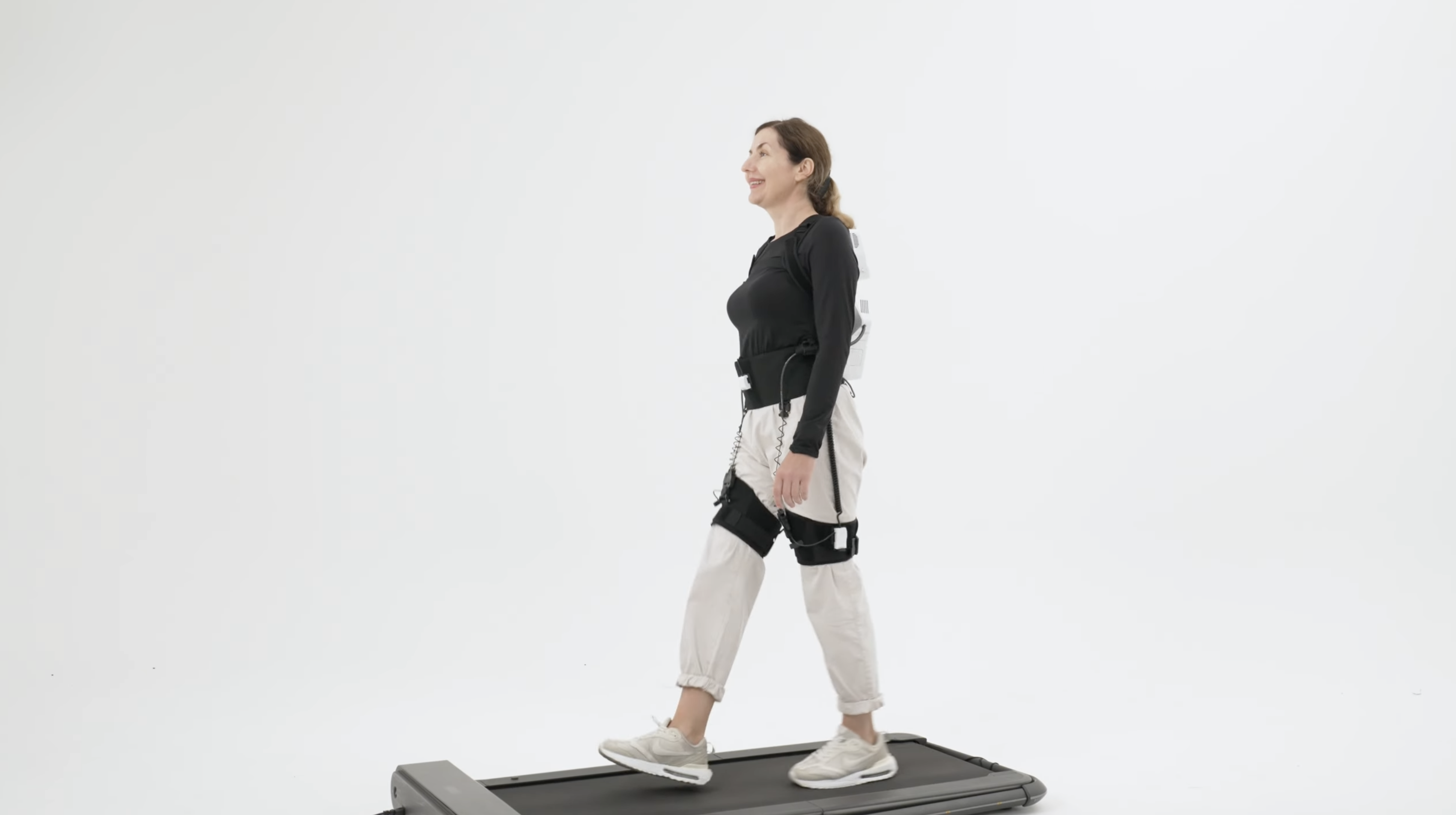
Robot-assisted rehabilitation provides structured and efficient gait training for patients with gait impairment caused by stroke, spinal cord injury, and other neurological conditions.
Using advanced wearable and tilt-table–type rehabilitation robots, this therapy enhances motor relearning and promotes faster functional recovery.
Robotic systems analyze the patient’s gait intention, balance, and muscle activation in real time. Based on this data, the device delivers the exact amount of assistance needed and enables high-repetition training, maximizing neuroplasticity.
At ROI Hospital, we operate personalized robot rehabilitation programs tailored to each patient’s stage of recovery.
Erigo Pro
Integrated Early Gait Rehabilitation System
(Tilt Training + Robotic Stepping + Functional Electrical Stimulation)
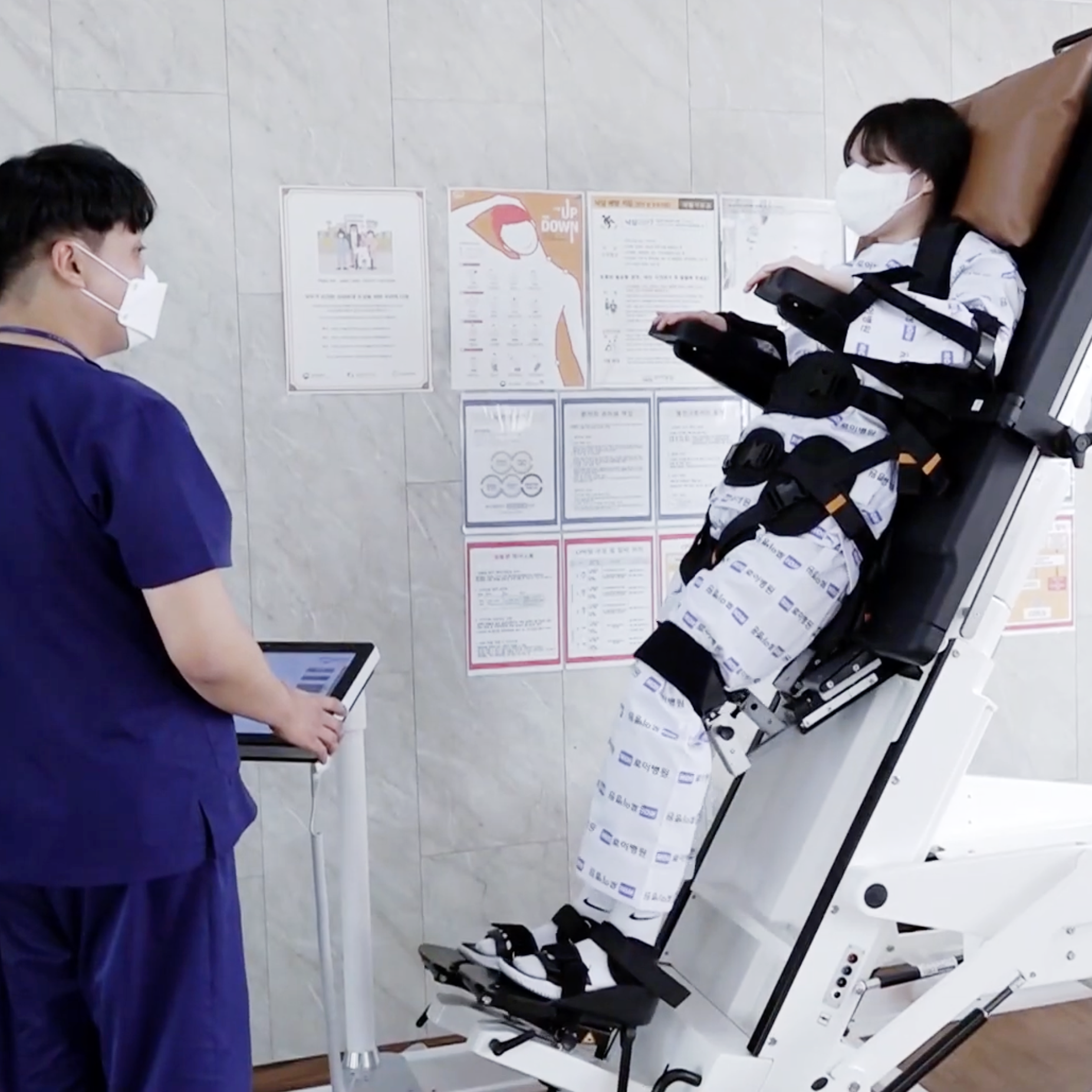
The Erigo Pro is an advanced rehabilitation robot specifically designed for patients who are not yet ready for upright gait training. Unlike conventional tilt tables that offer only passive standing, the Erigo Pro integrates tilt training, robotic stepping, and functional electrical stimulation (FES)—all within a single system.
This combination enables safe verticalization while simultaneously stimulating lower-limb movement and neuromuscular activation, making it ideal for early-stage rehabilitation.
Key Advantages
‣ Safe, Adjustable Verticalization
Gradual and controlled tilt up to full standing, tailored to each patient’s tolerance.
‣ Robotic Stepping for Early Gait Pattern Formation
Provides rhythmic leg movement and sensory input even for patients unable to move voluntarily.
‣ FES-Assisted Muscle Activation
Enhances motor control, reduces spasticity, and supports neuro-muscular recovery.
‣ Effective for Low-Consciousness or Severely Weak Patients
Enables repetitive, safe, early intervention essential for rebuilding foundational gait functions.
R-BOT
An advanced tilt-table robotic system designed to assist patients with standing and lower-limb rehabilitation.
R-BoT is an advanced rehabilitation robot that allows patients experiencing difficulties with standing and mobility to safely perform lower-limb exercises while lying down or in an upright position. By stably maintaining the patient's condition and utilizing precision controls based on a drive motor and a BLDC motor, it supports both passive and active joint movements, aiding in functional recovery for long-term chronic and severe patients.
Key Advantages
‣ Customized Rehabilitation Therapy
Enables precise settings tailored to the patient's condition, including speed, step length, and inclination.
‣ Real-Time Status Monitoring
Ensures safe training by monitoring the condition of patients with orthostatic hypotension in real time through heart rate measurement features.
‣ Active Movement Detection
Detects and facilitates the patient's active movements by transferring pressure through lower-limb joint pressure sensors.
‣ Early Rehabilitation & Symmetrical Weight-Bearing
Facilitates initial rehabilitation training for symmetrical weight-bearing of both lower limbs prior to gait training.
‣ Visual Feedback & Functional Electrical Stimulation (Optional)
Boosts patient motivation and rehabilitation drive using VR and 3D images, while improving motor capabilities through FES integration.
Training Programs & Functions
Standing Training · Passive & Active Joint Movements · Early Rehabilitation & Weight-Bearing Training
Target Patients
‣ Long-Term Chronic Patients
‣ Severe Patients
‣ Patients with Orthostatic Hypotension
‣ Patients Requiring Lower-Limb Muscle Reconstruction and Joint Movement Recovery
‣ Other Mobility and Standing Impairment Conditions
Hurotics H-Medi
Robotic End-Effector Gait Rehabilitation System
H-Medi is a robotic end-effector–based gait rehabilitation system designed for patients with impaired walking function. By guiding repetitive and symmetrical lower-limb movements, the system enables safe, intensive gait training while reducing physical strain on therapists. H-Medi supports early-stage rehabilitation and promotes functional recovery through task-specific, high-frequency training.
Key Features
‣ End-Effector–Based Gait Training
Provides guided footplate movement to simulate physiological gait cycles in a controlled environment.
‣ Adjustable Body Weight Support
Reduces load on the lower extremities, allowing patients to initiate gait training safely at early recovery stages.
‣ Symmetrical & Repetitive Movement Training
Encourages normalized gait patterns through consistent, high-repetition training.
‣ Real-Time Monitoring & Feedback
Enables therapists to monitor performance parameters and adjust training intensity according to patient condition.
‣ Therapist-Friendly Operation
Optimizes rehabilitation efficiency while minimizing therapist fatigue.
Training Applications
Passive Gait Training · Assisted Walking · Endurance Training · Early Mobilization · Symmetry Correction
Indications
‣ Stroke
‣ Spinal cord injury
‣ Traumatic brain injury
‣ Parkinson’s disease
‣ Post-operative orthopedic conditions
‣ Other neurological or musculoskeletal gait disorders
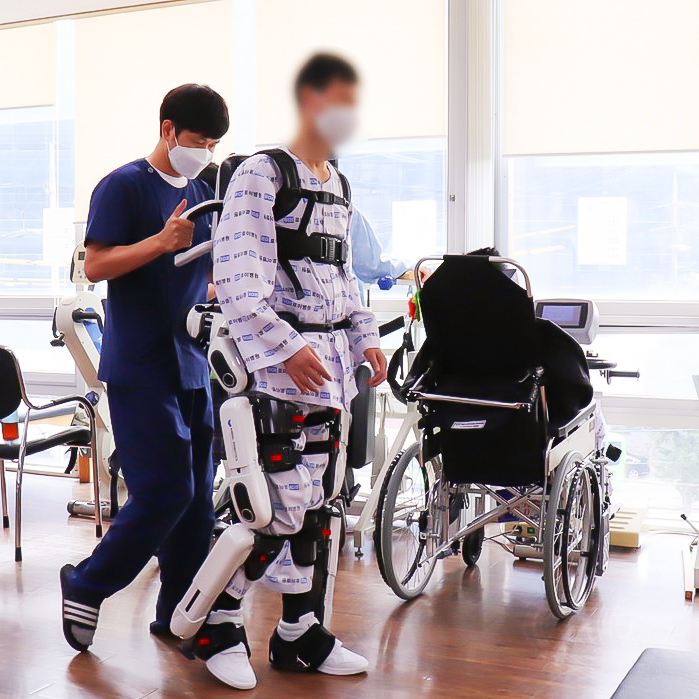
Angel Legs M
Wearable Overground Gait Rehabilitation Robot
Angel Legs M is a wearable exoskeleton robot designed for patients with incomplete lower-limb paralysis. The device senses the user’s intention to walk and provides precise assistance to support overground gait training—allowing patients to practice natural walking patterns in a real environment.
Key Features
‣ Overground Walking Capability
Enables gait training directly on the ground, promoting real-world gait pattern learning.
‣ Intention-Based Assistance
Sensors detect the patient’s voluntary movement and deliver the optimal level of support.
‣ Advanced Sensory Feedback for Balance & Weight Shift
Enhances neuromuscular recovery through refined balance and load-transfer training.
‣ High-Repetition Training for Neuroplasticity
Facilitates normalization and restoration of gait function.
Training Modes
Sit-to-Stand · Stand-to-Sit · Standing · Squat · Level Walking · Stair Ascent (6-step mode)
Indications
‣ Stroke
‣ Spinal cord injury
‣ Cerebral palsy
‣ Spina bifida
‣ Cervical/thoracic myelopathy
‣ Other gait impairment conditions