


Dysphagia Therapy
Dysphagia therapy at ROI Hospital is designed for patients who are at risk of aspiration—when food or liquids enter the airway instead of the esophagus—due to conditions such as brain injury, spinal cord injury, or other neurological impairments.
The swallowing process involves precise coordination of the lips, tongue, oral cavity, pharynx, larynx, and esophagus.
To ensure safe and effective rehabilitation, ROI Hospital follows a standardized protocol consisting of clinical evaluation → instrumental assessment (VFSS) → intensive therapy → re-evaluation, with the goal of restoring safe swallowing function.
Who Is Dysphagia Therapy For?
1. Patients with central nervous system disorders
‣ Stroke
‣ Traumatic brain injury
‣ Upper cervical spinal cord injury
‣ Parkinson’s disease and other neurodegenerative disorders
2. Patients with peripheral nerve or muscular disorders
‣ Guillain–Barré syndrome
‣ Swallowing difficulties due to peripheral nerve injury
3. Patients with difficulty maintaining adequate nutrition or hydration
‣ Coughing, choking, or suspected aspiration during meals
‣ Discomfort with chewing, saliva control, or oral transit of food
‣ Excessively prolonged mealtimes
Dysphagia therapy applies to any patient who has difficulty eating or drinking safely.
Dysphagia Evaluation Process
To identify the underlying cause and guide treatment, dysphagia therapy follows these steps:
1. Clinical Swallow Evaluation
An occupational therapist assesses the patient’s:
‣ Posture
‣ Sensation
‣ Facial and oral musculature
‣ Tongue function
‣ Oral structure
‣ Chewing ability
‣ Clinical symptoms during swallowing
2. Videofluoroscopic Swallowing Study (VFSS)
A collaborative X-ray study performed by a physician, radiologic technologist, and occupational therapist.
The entire swallowing process—from oral phase → pharyngeal phase → esophageal phase—is recorded to accurately analyze:
‣ Aspiration or penetration
‣ Phase-specific dysfunction
‣ Areas of muscular weakness
3. Intensive One-on-One Therapy
Based on the assessment results, the occupational therapist provides daily intensive therapy sessions during weekdays.
4. Re-evaluation & Discharge Planning
After a period of repeated training, VFSS is performed again to determine:
‣ Whether swallowing has become safe
‣ Whether additional therapy is needed
If safety concerns remain, therapy continues until the patient meets clinical goals.
Dysphagia Therapy Program
To improve swallowing function, ROI Hospital provides a structured program that may include:
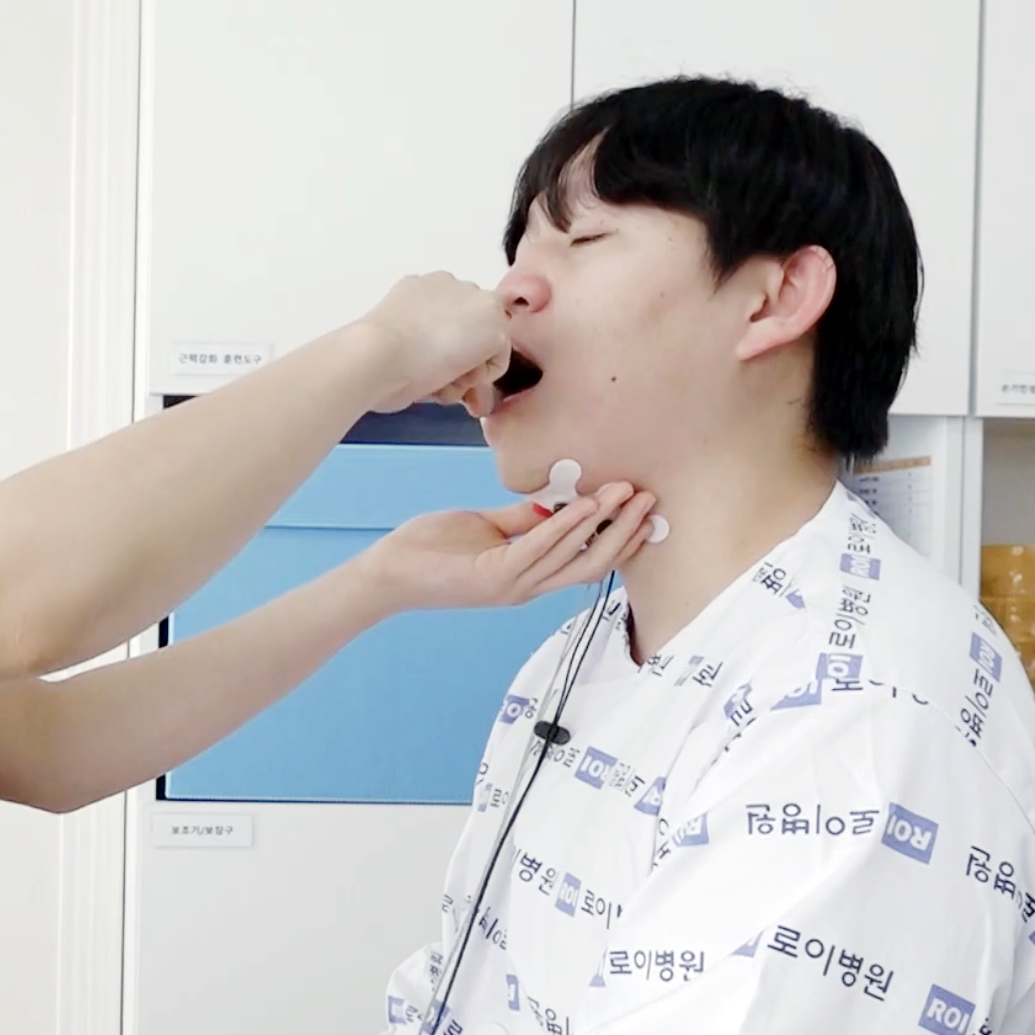
1. Oral–Facial Sensory and Muscle Strengthening
‣ Vibratory stimulation
‣ Ice stick stimulation
‣ Oral motor strengthening for chewing, bolus control, and swallowing initiation
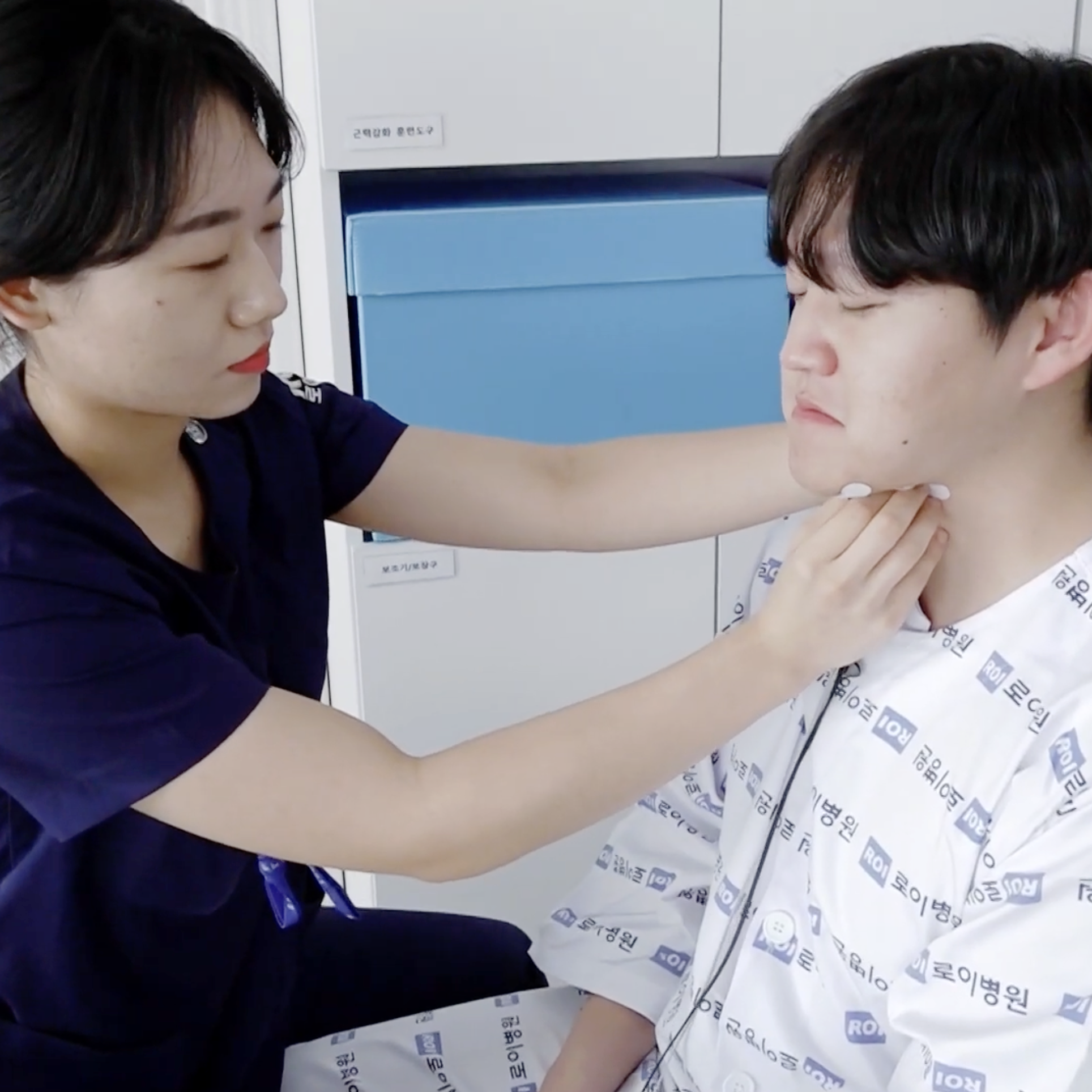
2. Neuromuscular Electrical Stimulation (NMES)
‣ Deep activation of swallowing musculature
‣ Improved muscle contraction and timing
3. Texture Modification & Mealtime Safety Training
‣ Education on selecting appropriate food textures
‣ Safe feeding strategies and positioning
‣ Environmental adjustments for safer meals
4. Pharyngeal & Laryngeal Exercises
‣ Targeted exercises to improve airway protection
‣ Strengthening of pharyngeal contraction and hyolaryngeal elevation